
Where The Worm Won't Die: Understanding A Puzzling Saying in The Bible
What is meant by the phrase that their 'worm will not die'? In this work, we explore this puzzling phrase, its hidden meaning, and its connection to the soul's journey.


After some hopeful prophecies about the lead-up to the Messianic era, the Book of Isaiah ends somewhat abruptly:
"They shall go out and look at the corpses of the men who rebelled against me, for their worm will not die, and their fire will not be quenched, and they will be an abhorrence to all flesh" - Isaiah 66:24
Many have wondered, "What does it mean that their 'worm will not die?'
The Worm In Hebrew
Worms actually have a broad range of meanings in the Biblical tradition.
Among the most common Hebrew words translated as "worm" are Tola'at (תּוֹלַעַת) and Rimah (רִמָּה). They are sometimes used interchangeably, other times appearing together to strengthen a point, as in Job 25:6:
How much less a mortal, a maggot (רִמָּה),
One born of humans, a worm (תּוֹלֵעָה).
Tola'at is the word used in Isaiah 66, and it is worth noting that, in many Biblical appearances, it's translated as scarlet or crimson. This refers to the red dye produced from this worm, which was used in the Tabernacle curtains and the High Priest's garments.
The Metaphor of the Worm
Worms are vulnerable creatures, and among the lowest of creation. This serves as a metaphor for the posture of humility humans should have toward the Creator.
"But I am a worm, less than human..." - Psalm 22:7
I'm reminded of a story about a Rabbi who was known for picking up worms and putting them in the grass after a rainstorm to prevent them from being stepped on. Thus, the Mussar tradition encourages us to be careful with all of creation, because, in the end, we too will go to a "place of dust and worms."¹
The Power of Prayer
In Isaiah 41:14, Jacob is called a worm. There are a number of ways to understand this, one representing the smallness of the nation of Israel, and how G_D will protect them.
Another view: like the worm, whose power is in its mouth, so too is Israel's power from the mouth through prayer.
The Aftermath of Rebellion
The specific phrase in Isaiah, "their worm will not die" (תוֹלַעְתָּם לֹא תָמוּת), has undergone an interesting evolution from the early Biblical era to the late Second Temple² period.
The immediate imagery of Isaiah's phrase may have been related to the aftermath of Iron Age wars. Gruesome battlefields filled with decomposing bodies sealed a direct connection between worms, maggots, and death.
In the context of Isaiah 66, it is the righteous, having survived the war (likely the war of Gog and Magog), who look upon those defeated in battle. The wicked in this scene are those who rebelled against G_D.
In time, this idea became associated with the concept of Gehinnom, also known as Gehenna.³
The Valley of Hinnom
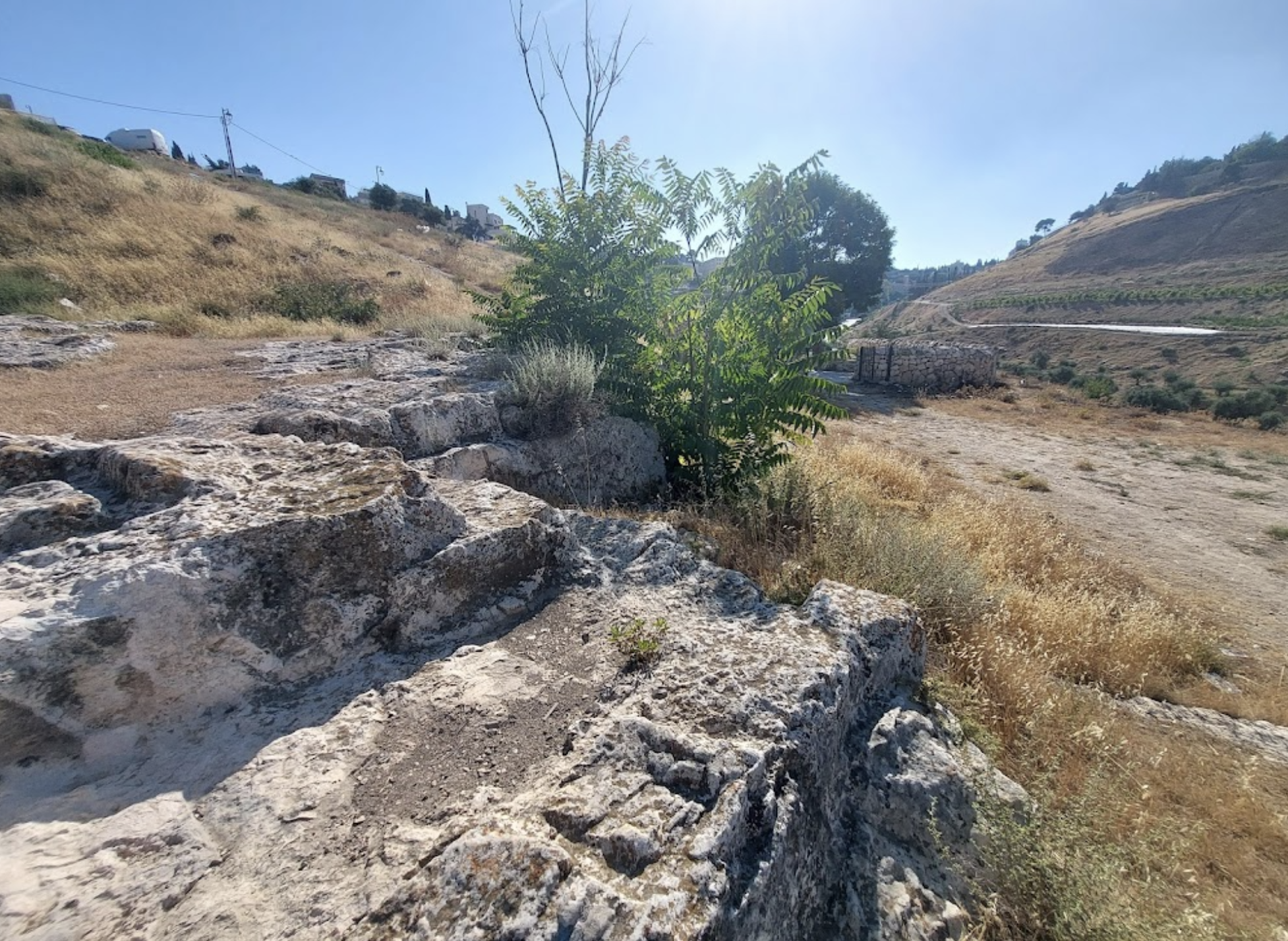
The word Gehinnom in Hebrew comes from Gei Hinnom (גֵּיא הִנֹּם), the Valley of Hinnom, which runs along the southwestern edge of Jerusalem.
Up until the 7th or 8th centuries BCE, pagans used this site for the ritual sacrifice of children to Molech and other idolatrous practices. For the Israelites, this land was cursed.