
Babel and the Ethics of Technology
At first glance, the Biblical account of the Tower of Babel might appear to be closer to a children's story with its deceivingly simple moral, warning of the dangers of misapplied human ingenuity. However, the Rabbinic tradition whispers a much deeper story - one that is still relevant in our time.

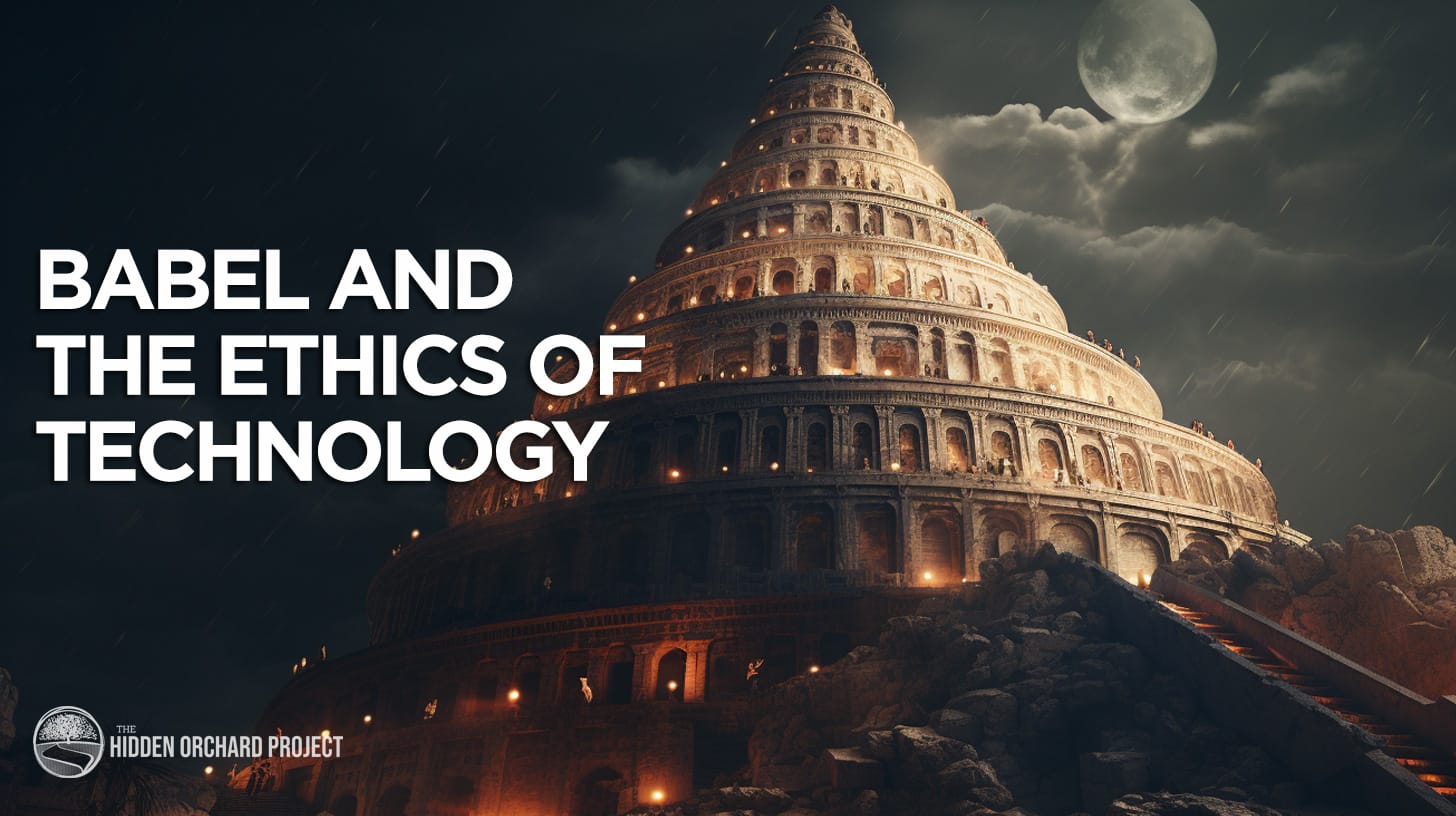
At first glance, the Biblical account of the Tower of Babel might appear to be a children's story with a simple moral, warning of the dangers of misapplied human ingenuity.
But make no mistake, the Rabbinic tradition whispers a much deeper story, one that is still relevant in our time.
Rolling Back Creation
Shortly after the great flood, known in Hebrew as HaMabul (הַמַּבּוּל), the earth had been washed clean of impurity. The Biblical text recounts this event in a way that reflects a rolling back of the creation events from a few chapters earlier.
With the exception of fish and those inside the ark, nearly everything else was exterminated in an effort to remove the impurity (tumah) of debauchery that had become normative on Earth.
More than just physical misdeeds, Genesis 6 also tells the story of the mixing of the upper and lower worlds through the Nephilim¹. Boundaries were crossed. And while many wish to dismiss this idea through rational means, significant discussions in the Rabbinic tradition hint that there is much more to these fallen ones.
The Flood and The Watchers
As for the flood, hundreds of cultures have some version of this story. Among the similarities, it is often recounted that some degree of higher-dimensional knowledge was passed down to humans from otherworldly beings.
Among these secrets, tradition tells us, were various forms of sexual immorality and the knowledge of high-tech weaponry that humans had not yet attained by their own means. This is tantamount to giving weapons to toddlers, and the ongoing effects were devastating to humanity. As a result, the Watchers, and all of creation were punished.
Post-Flood Degeneration
Yet, the Torah makes it clear that the flood did not exactly solve the problem; not entirely. How did humanity degenerate into widespread evil so soon after the flood?
Almost immediately upon the settling of the Ark, we learn that evil had taken deep roots in the heart of mankind (Genesis 9:22). Within a few generations, humans had, again, reached new depths of depravity, warranting a Divine punishment.
New Language(s)?
Up to the time of the building of the Tower of Babel, humanity benefited from clear communication and the potential for international collaboration. But as we learned, this was not necessarily a positive thing.
The name of the Tower, "Babel" (בָּבֶל) is related to the Hebrew word for "confusion." This hints at the most well-known of the punishments humanity underwent, the scrambling of languages.
This implies that humanity initially spoke one language. In fact, the texts tells us that². Rashi, among other commentators, tells us that this was the Holy language, Hebrew³.
This suggests that the Creator finds confusion and conflict as more favorable outcomes (at the moment) than the possibility of humans using this forbidden knowledge at scale.
For what it is worth, this problem will be resolved in the final redemption, when humanity is restored to the Hebrew language again;
For then I will make the people pure of speech,
So that they all invoke G_D by Name
And render service with one accord. - Zephaniah 3:9
An Evil Building Project
The Biblical text tells us the people had conspired to build a city and a tower. Laughably, their goal was to attack the Creator of the world.
While many perceive their efforts as idolatrous in nature, did this warrant the confounding of language⁴, and the numerous problems that stemmed from this?
Was it the scale of their project, or were they engaged in something more sinister?
In his book, "Aliens, Angels, and Demons," Rabbi Ariel Bar Tzadok⁵ mines the Rabbinic literature to expand on these ideas from deeper within the Jewish tradition. And, it is fascinating, to say the least.