
Nephilim, Azazel, and the Backstory of Rosh Hashanah and Yom Kippur
Behind Rosh Hashanah and Yom Kippur lies a hidden tradition of the Nephilim, the angels who fell, the giants who corrupted the earth, and the restoration of creation that shapes the meaning of the High Holy Days.

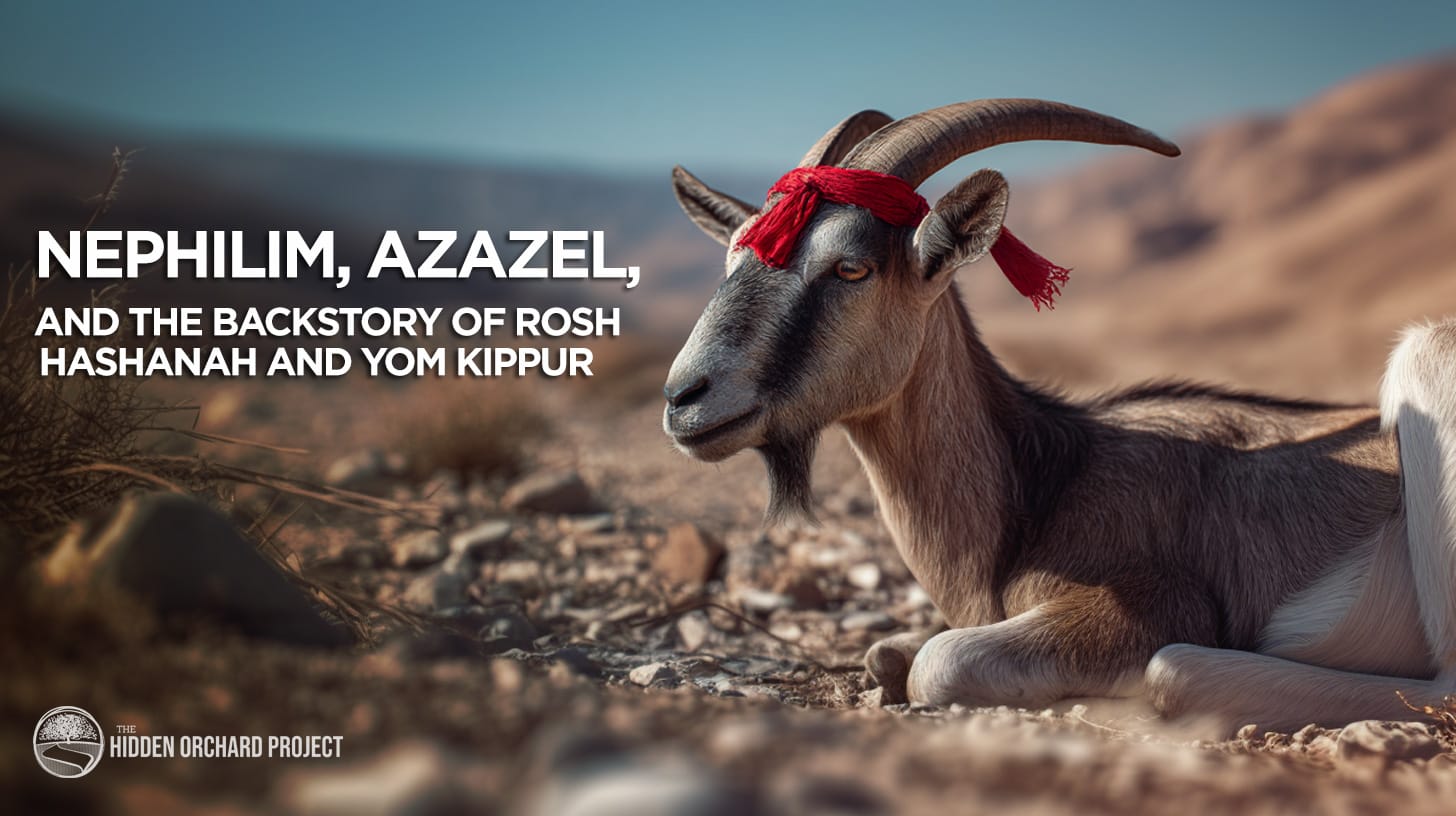
Rosh Hashanah¹ and Yom Kippur are times of renewal, repentance, and a fresh start. But in the shadows of the High Holy days lurks a very old story involving, believe it or not, the Nephilim.
Previously, we set the foundation for understanding the Nephilim, the Watchers, and the devastating sins that led to the Biblical flood. In that article², we found that the story of the Nephilim is incredibly pervasive, appearing in the most unexpected places throughout the Bible.
The Sin of the Nephilim
To begin to understand the connections, remember that the Nephilim are tied to the tropes of sexual immorality, licentiousness, and the corruption of creation. Any mention of these characters in the Rabbinic literature will often connect to these ideas on some level.
The Rabbis did not make this up; they simply observed recurring patterns in the Torah, rooted in Genesis 6 when 'divine beings' mated with human women. Tradition teaches that their rebellion offset the balance of creation.
Efraim Palvanov³ points out that, for two species to breed, they must be within one umbrella of species. This raises interesting questions for the nature and identity of the Angels and the Nephilim.
In the immediate, their actions produced unnatural offspring - Giants - who plagued the nation of Israel throughout the texts. In the long view, creation would never be the same, undergoing another level of corruption.
Creation Corrupted
This creates the first connection to the holidays of Rosh Hashanah and Yom Kippur.
Rosh Hashanah is celebrated as both the creation of humanity and the world. This theme is consistent through the holiday liturgy, and it is no mistake that the Torah cycle begins anew with the Book of Genesis at the end of this holiday period.
The Biblical flood served as a global purge, but the perversion of human sexuality persists. This will be restored and elevated in the World to Come⁴, but remains one of the most destructive forces of evil on the planet. Some suggest this is one of the major themes of this generation.
This connects the generation of the flood (דור המבול | dor ha-mabul) with the generation before Messiah's arrival with some important parallels.
Uzza and Azazel
As for the sin of the Angels, Jewish tradition remembers some of their names. Though rendered in a number of ways⁵, they are often called Shemchazi (שמחזאי), Uziel (עוזיאל), and Azazel (עזאזל).
From my understanding, there were many angels, but Shemchazi seems to have been the leader of this rebellion. And it was Uziel and, in particular, Azazel who did the most damage to creation.
Interestingly, Azazel is found in Leviticus, specifically in the rituals of the Yom Kippur offering known as the "scapegoat."
Is there a connection between these angels, or is this a coincidence?