
The Way of the Chasid Rediscovering the Ancient Path of Spiritual Growth
Long before Chasidic Judaism, the Bible and the sages spoke of the chasid, one who serves the Creator with love, humility, and holy intention. In this article, we begin an exploration of this concept and examine how it may have shaped the spiritual worldview of Jesus.

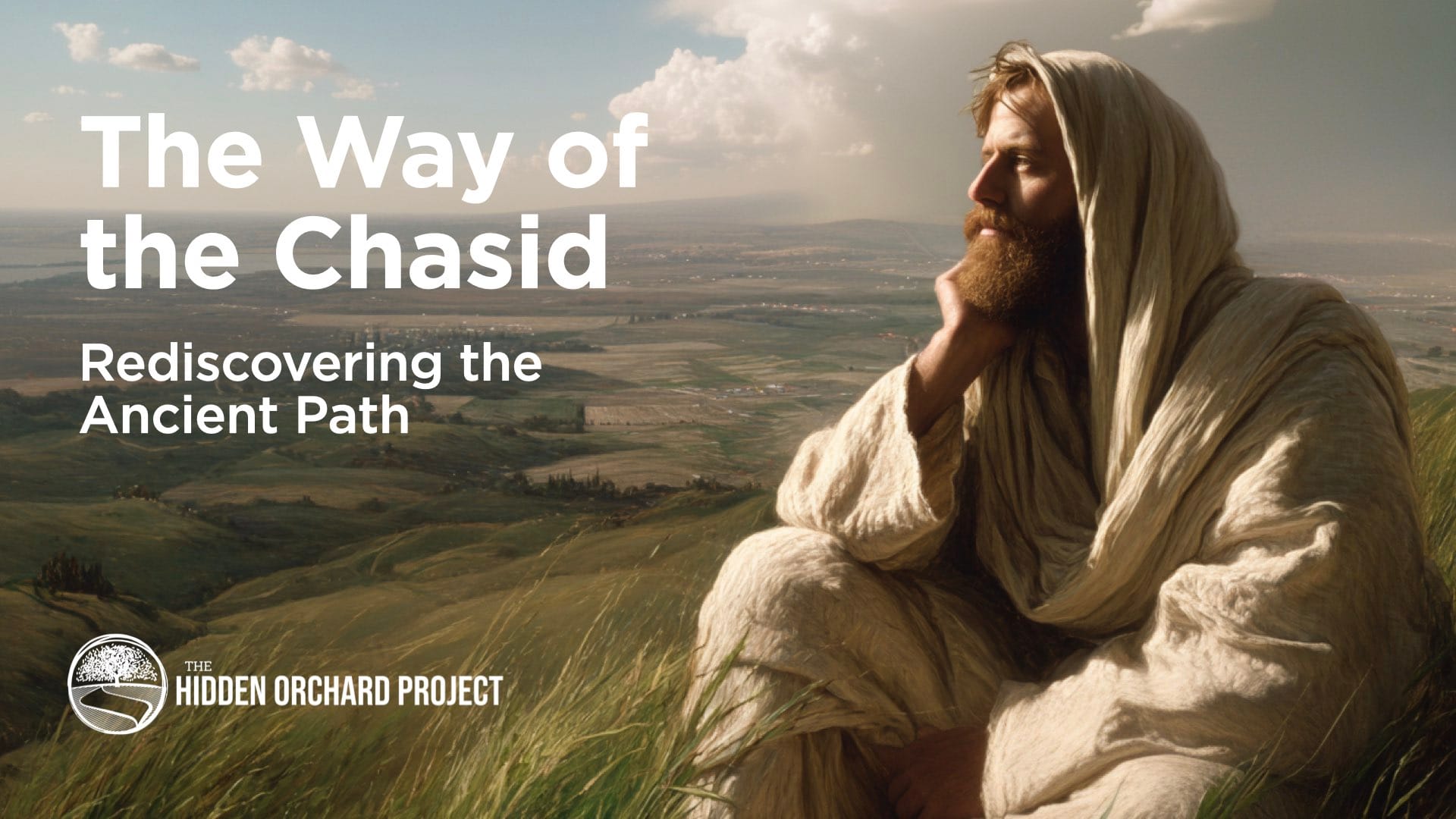
The Hebrew word Chasid (חָסִיד) represents an allusive concept that can be difficult to define, and even more difficult to live out.
In this article, we’ll begin an exploration of the origins of this word in the Biblical texts, what the Talmudic Sages had to say about it, and a high-level pass at what it means to be a chasid.
Last, we'll consider how the worldview of the chasid may have contributed to the tensions between Jesus and some of the religious leaders of his day, and why it matters.
The Way of the Chasid
English translations often define the word chasid as loyal, faithful, or pious, but these only skim the surface.
For a working definition, the way of the chasid (later known as chasidus) is a spiritual path within Judaism that seeks inner refinement and a deeper connection with the Creator.
Broadly speaking, chasidus strives to recognize G_D in all of creation and experience. Thus, service of G_D is expressed through observance of the commandments, but infused with holy intention, joy, and humility.
A guiding principle from the Mussar masters is that self-identifying as a chasid is a sign one has missed the mark.
Chasid in the Bible
The first appearance of the word chasid is found in Deuteronomy 33:8, when Moses noted the tribe of Levi's special closeness with G_D.
But you do not have to be born a Levi to be a chasid. Someone who lives a life that honors and seeks G_D is off to a good start.
Sometimes, a chasid is translated as 'saint,' one who dedicates their life to the pursuit of holiness above what is normal.
This relationship is a two-way path; we learn that G_D protects the chasid (1 Samuel 2:9), and takes special care of them:
“Know that the LORD singles out the Chasid (חָסִיד) for Himself; the LORD hears when I call to Him.”
- Psalm 4:3
The Ancient Chasadim of Galilee
Perhaps admiring these traits, a first-century group known as the Chasadim¹ (“the pious ones”) emerged, particularly in the lower Galilee.
In many ways, they were like the Pharisees², but they also differed in a few key ways, for example, they;
- were mostly unaffiliated with formal institutions, (such as the schools of the Pharisees),
- emphasized a more personal, direct relationship with G_D,
- resisted status and hierarchy,
- and leaned toward asceticism or withdrawal from society
The more well-known among the Chasadim were miracle-workers like Choni the "Circle-drawer" (ha-Me’aggel) and Chanina ben Dosa.
It seems they had a custom of referring to the Creator as “Abba” (Father), an unusual intimacy that really irritated some of the Pharisees (Taʿanit 23a).
Chasidic Judaism
A connection can be made between the word chasid and Chasidic, a relatively modern movement within Orthodox Judaism.
Built upon the foundation of Jewish law, Chasidic Judaism tends to emphasize the mystical and experiential dimensions of Torah more than normative Orthodoxy.
Chasidic stories are often beautiful and accessible, reflecting ancient values and depicting the Creator as a Father or King.
Modern Chasidic Judaism benefits from centuries of development, the language of a post-psychology era, and the emerging sciences, which help reach broader audiences today.
The emergence of different customs within Chasidic communities led to the early tensions surrounding their rise in Eastern Europe. These mirror the debates reflected in the Gospels between Jesus and certain leaders.
A Labor of Love
Though the ancient Chasadim are not the same as modern Chasidic Jews, they share a spiritual root. They were known for:
- Observing the Torah beyond the letter of the law
- Dedication to prayer, especially contemplative and lengthened prayer
- Emphasis on personal ethics (Mussar), taking care not to embarrass others, avoidance of anger or revenge, and encouraging the giving of charity
- Showing mercy and kindness
- Favoring a simple life of service
- Avoiding acquiring worldly possessions
- Strict personal purity
- Repentance
- Miracles and piety
Many of these ideas parallel Jesus's teachings.
The Real Issue
I personally think the Chasadim were deeply influential to Jesus's worldview, and this adds more nuance to the arguments in the Gospels.
Like the Galilean Chasadim, Jesus remained within the fold of early Judaism. His critique of the leaders was that they had lost the inner spark of love for G_D (Ahavat Hashem), some becoming corrupted and self-centered.
“Woe to you, teachers of the law and Pharisees, you hypocrites! You clean the outside of the cup and dish, but inside they are full of greed and self-indulgence.”
- Matthew 23:25
This is important: Jesus’s rebuke was not a rejection of tradition, Torah, or even Judaism. He was not abolishing the commandments³, he was strengthening them.
Essentially, Jesus sought to teach the way of the chasid for the everyday people, and rebuked those leaders who had failed to embody these principles.
Like many other Rabbis, long before, and long after him, he rejected the outward show of piety, the law-keeping without love for G_D. He held leaders to a higher standard.
And this gets to the heart of the issue. These dichotomies exist in every generation. Many of us are guilty of drifting to mechanical expressions at times.
Or, it is easy to get lost in the weeds critiquing other's theology or practices, while neglecting the far more difficult of refining our own.
Mesillat Yesharim - The Way of the Just
For those interested, the topic of chasidus is a multi-chapter focus in the classic work, Mesilat Yesharim⁴. We will revisit this topic in more depth.
True chasidus, both in the first century, in 18th century Europe, and in modern times challenges us to purify our intentions and to scrutinize how we serve the Creator.
We are challenged to think deeper about our actions, words, and thoughts, and how these affect others. It is not easy, which is why it is often neglected.
But, this is where the real work awaits us. And where true growth lies.
Notes
¹ Jesus and the Chasadim. See the works of Scholar, Shmuel Safrai
⁴ Messilat Yesharim Ramchal