
Prepared, Not Paranoid: Faith and Readiness in Uncertain Times
How can one focus on faith, light, and spiritual growth while also preparing for crisis, danger, or societal breakdown? This article explores the tension between spiritual optimism and practical preparedness.

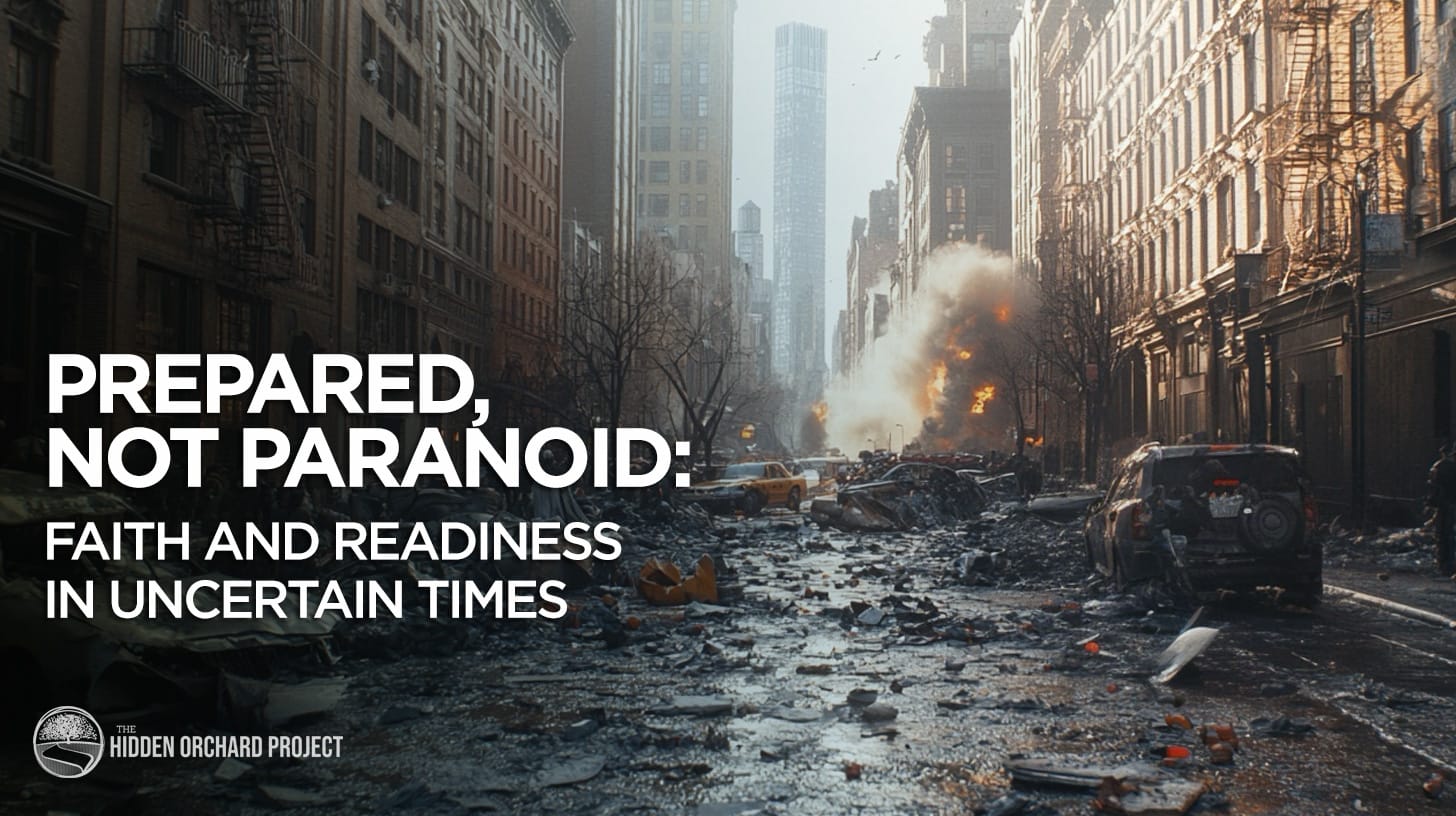
This article is a bit of a departure from the norm, but I believe enough will find it relevant and applicable.
When you spend a significant amount of your time looking inward, focused on spiritual development - investing time in thoughts of preparedness, physical safety, or self-defense can feel counterintuitive.
It's an abrupt shift because so much of our personal development is centered upon seeing the world through a positive perspective. We're challenged to overcome cynicism and see the good in others and the world. And we should.
But we cannot ignore reality. We cannot unsee the flashing red lights all around us. Antisemitism is on an alarming rise for Jews, and their allies. I can see it.
Unfortunately, for many people of faith, ignoring the problem has become a primary coping mechanism. But since October 7th, reminders seem to come with increasing frequency.
In an age of information, content can become psychological warfare, making it difficult to get a true pulse of the cultural majority sentiment. Nevertheless, the signals are concerning.
Preparation Basics
The other side of living in an age of information is that there are numerous resources to help gain the insider knowledge once limited to a handful of experts. You can learn just about anything, and quickly. You just have to look.
You'll find that preparation is a mindset more than anything. Simple practices can make a life-or-death difference, and anyone can begin learning today.
Below are just a few ideas to get you thinking, and share some of your own below.
1. Plan for the Most Likely Scenarios
It is virtually impossible to plan for everything, so take a moment and consider the scenarios that are most likely in your environment.
What weather catastrophes are you most subject to? Do you live in a city or a rural area? These contexts will provide different considerations and planning.
For example, if you don't live in an area where hurricanes or tornadoes are a problem, scratch them off your list. But societal breakdown is one that virtually everyone might want to consider at some level.
Make a short list and use it in step 2, Planning.
2. P.A.C.E. Planning
P.A.C.E. is an acronym for Primary, Alternate, Contingency, and Emergency. This framework will help you develop a multi-tier contingency plan if something unexpected happens.
For more, watch this video.
Once ready, coordinate and share with family and friends. There may be some investment necessary, but not always. The goal is to begin with what you currently have available and build from there.
3. Plan for Shortages
If there has been one thing we've observed since 2020 is that supply chains can be disrupted quite easily. And when they do, society breaks down even faster when panic sets in. Sometimes, the panic-induced hoarding can create a scarcity situation where there is none.
In these scenarios, limiting the need to go out into the fray is a good idea. Do you have access to basic first aid, water, and food if supplies run low?
Though this can be challenging for prescription medications, order ahead on supplements and various necessities you need steady access to. Cycle through old stores and replace as you go - just try to keep a few extra on hand.
4. Bug Out or Bug In?
Many have the idea in mind that survival requires immediately 'bugging out.' This is not always the best plan. Consider your planning contingencies and determine a scenario for each.
In general, most experts suggest having a bag (or crate) of important supplies ready in the event that you do have to leave in a hurry. Some suggest keeping a bag in your vehicle if you can afford the extra items. This would include first aid, water purification, eating utensils, rain gear, fire-starting kit, tarps, an extra layer of clothing, etc.
Do some research, and trust me, you will have no trouble finding suggestions on what to include. Just remember your plan above and start there.
However, if you live in a city, some suggest there may be times to seek an alternate place to move to. If this is something you have considered, here is one video with a series of scenarios.
5. Training
If you have the means, there is no end to the value of solid training. Whether it is self defense, medical, range time, or other survival programs - having gone through simulations of catastrophic experiences in a controlled learning environment will prepare one for the events, should they become reality.
6. Health
No matter what the world brings us, physical health is always of value. Not just for readiness, but also as a means of stress management. When fear and anxiety build all around us, a little exercise, a weighted walk, a hike, a bike-ride, or a trip the gym can help your body and mind recover.
Here is one of many great resources shared with me:

7. Finding Balance
Lastly, we have to find a balance between preparing for a potential negative outcome and working to bring a more elevated one.
Over the years, I've encountered people who scoff at the idea of readiness, believing such things to be antithetical to faith. For me, these are not mutually exclusive.
My brother and I grew up shaped by the weight of Holocaust stories and their impact on our family. Our father’s career in law enforcement, including his role as Commander of the Maryland State Police SWAT team, exposed us to the harsh realities of the world. Cynicism is easy, but finding a balance between light and dark is a challenge we must learn in life.
It's why we are here.
Further, the Bible teaches us that we should not rely on miracles. We must prepare in the physical and stay connected in the spiritual.
This is why King David stands a model for our times. He led his people through catastrophic wars, hardship and trials. Yet, he remained steadfast in his faith. He prepared, he took action, and he prayed.
Stay safe, and share some of your own ideas and advice in the comments.
Want to Learn More?
 The Hidden Orchard
 The Hidden Orchard
 The Hidden Orchard