
Rosh Hashanah & the Kingdom: Uncovering the Context of the Gospel Message
When most readers of the New Testament think about biblical holidays, Passover and Shavuot usually come to mind first. In this article, we'll see how Rosh Hashanah and Yom Kippur may be the most important for understanding the Gospel message.
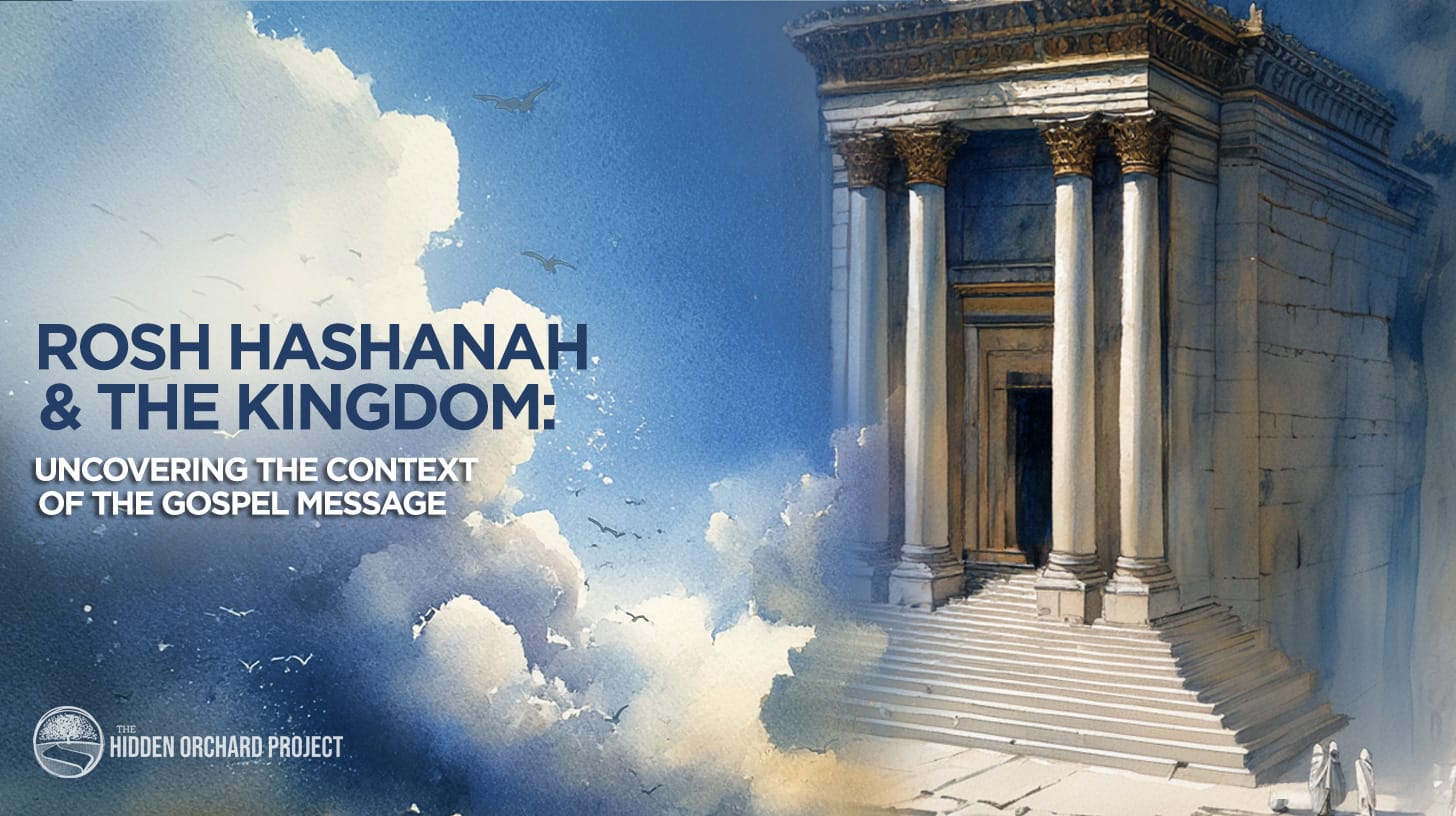
When New Testament readers think of Biblical Jewish holidays, Passover and Shavuot (Pentecost) are the most easily recognized in the Apostolic writings. Jesus also observed Sukkot and was back in Jerusalem at the time of Chanukkah.
But is there any connection to Rosh Hashanah or other fall holidays? In fact, many!
Is Rosh Hashanah In The Bible?
Many have noticed that the words "Rosh Hashanah" (ראש השנה) are not found in the Bible. Though technically true, the Bible commands the Israelites on the key observances for the first day of the month of Tishrei.
In the Torah, Rosh Hashanah is associated with the following terms:
- Yom Teruah (יוֹם תְּרוּעָה) | “the day of trumpet blasts" in Numbers 29:1
- Zichron haTeruah (זִכְרוֹן תְּרוּעָה) | “The Remembrance of blasts" in Leviticus 23:24
Additional references to the day are made, as in Nehemiah 8:1, "the first day of the seventh month, and the Rabbis tell us that Job's day of judgment (1:6) was on Rosh Hashanah.
Though other allusions can be found, the connection is not as direct as some would like. The prevailing assumption is that Rosh Hashanah is a Rabbinic holiday and not relevant to the New Testament.
However, once you become familiar with the themes of Rosh Hashanah and Yom Kippur, you won't be able to unsee them.
These might be the most influential holidays to the Apostolic writings, reaffirming and contextualizing what the "Gospel message" is all about.
Let's first go back in time.
Rosh Hashanah Themes
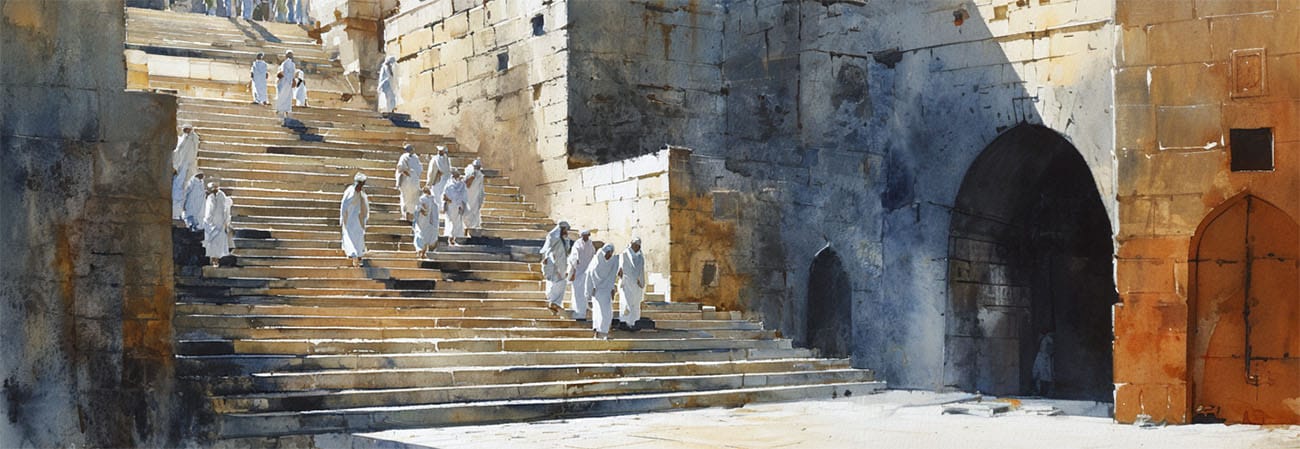
By the first century, the observance of Rosh Hashanah, a Temple-based event, was already infused with spiritual depth by the Rabbinic schools of Hillel and Shammai.¹
Though Rosh Hashanah was not one of the Shalosh Regelim (שלש רגלים), the three festivals requiring presence in Jerusalem, the Rabbis recognized the significance of its focus on repentance². Rosh Hashanah is an opportunity for all humanity to get their affairs in order and prepare to stand before the King.
In the Rabbinic literature, Rosh Hashanah became heavily associated with the heavenly aspect of judgment through metaphors such as the Book of Life, the Kingdom of G_D, Angelic³ proclamations, and trumpet blasts that can be heard through the upper and lower worlds.
The fall festivals provide a vivid set of images that the New Testament writers leveraged heavily in their writings.
Here are just a few.
1. The Shofar and the Trumpet Blasts
One of the most recognizable aspects of Rosh Hashanah is the shofar (שופר). In the Bible, the shofar (ram's horn) is a call to assemble (Numbers 10:2), to battle (Joshua 6:20), and to prepare for the coming of a King (1 Kings 1:34).
The ram's horn is a direct connection to the near-sacrifice of Isaac, who was replaced by a ram caught in a thicket by its horns. This occurred on the very place the Temple stands, incorporating deep themes of atonement co-opted by the Gospel writers.⁴
The trumpets were a major part of the Temple services before its destruction⁵. From that point forward, Rosh Hashanah (and all of the holidays) became anticipatory for the arrival of the Messiah, the inauguration of the Temple, and the Messianic kingdom.
As such, a primary mitzvah of Rosh Hashanah is to hear the Shofar, calling us to repent for our sins, and wake up, in the spiritual sense. The New Testament borrows these themes often and in accordance with the Rabbinic tradition.
Teaching about the coming kingdom, Paul tells the Corinthians:
“At the last trumpet, the dead will be raised imperishable” - 1 Corinthians 15:52
In Thessalonians, he writes:
“The Lord himself will descend from heaven with a cry of command, with the voice of an archangel, and with the sound of the trumpet of G_D”
- 1 Thessalonians 4:16
This is Rosh Hashanah language. The trumpet/shofar blasts will gather the assembly, proclaim judgment, and signal the resurrection.
2. Rosh Hashanah and Redemption
As stated above, some sources believe the future redemption will arrive during the fall holidays:
... on Rosh HaShana our forefathers’ slavery in Egypt ceased; in Nisan the Jewish people were redeemed from Egypt; and in Tishrei in the future the Jewish people will be redeemed in the final redemption with the coming of the Messiah.
- Rosh Hashanah 11
The book of Revelation heavily relies on this tradition, featuring the sequence and eschatological urgency of the fall holidays and imagery.
3. The Day of Judgment
Though there is still time to change the outcome, Rosh Hashanah is generally called Yom HaDin, the Day of Judgment, because on this day, all of humanity undergoes a life review. And not just the Jewish people; everyone!
The Mishnah states:
... on Rosh HaShanah, all creatures pass before Him like sheep - Mishnah Rosh Hashanah 1:2
This metaphor reflects the ritual for selecting goats for sin-offerings in the Temple courtyards for Yom Kippur.
Jesus frequently speaks of judgment in these themes. The parable of the Sheep and the Goats aligns with this backdrop, where the Messiah begins the Messianic kingdom by judging the nations.
In addition, the Parable of the Wheat and the Tares reflects Rosh Hashanah’s sorting of the righteous and wicked at the end of days.
4. The Book of Life
A major aspect of the Day of Judgment is the metaphor of being inscribed in one of several books. Ideally, the righteous are inscribed in the Book of Life.
This is why it is customary for people to say, "May you be inscribed," (כְּתִיבָה וַחֲתִימָה טוֹבָה - Ketivah v’Chatimah Tovah) as we get close to the fall holidays.
This is not Rabbinic mumbo jumbo; we see this mentioned in Psalm 69:29:
... may they be erased from the book of life,
and not be inscribed with the righteous.
Revelation included this idea numerous times, describing thrones, opened books, and the dead being judged. The imagery of Rosh Hashanah’s courtroom in Revelation is unmistakable.
In the Kabbalah, the "Book of Life" (Sefer Chayim ספר החיים) is a euphemism for the World to Come⁶.
5. Forgiveness of Others
In Matthew 6:15, Jesus taught that if one does not forgive others, neither will the Father forgive. Elsewhere⁷, he taught that forgiveness between a brother or sister should take priority before even giving an offering to G_D.
This, too, is a classic teaching for the fall holidays. In the Talmud, we read:
“For transgressions between a person and G_D, Yom Kippur atones; but for transgressions between one person and another, Yom Kippur does not atone until he appeases his fellow.” - Talmud Yoma 85b
6. The Gospel Message - Repent!
Central to Rosh Hashanah and Yom Kippur is Repentance, particularly the 10 days between these holidays. During this time, we focus our efforts on self-examination, confession, and returning to G_D, with the hope that redemption will find us ready.
This might be the most prominent aspect of the New Testament, as it is literally the Gospel message: “Repent, for the kingdom of heaven is at hand!”
It anticipates an arrival and recognizes the need to prepare. At all times, these words apply, but no time more prominently than Rosh Hashanah.
Rosh Hashanah as the Backdrop to the Gospel
With these ideas, the New Testament takes on new depth. We can see that these themes are foundational to the coming of the Messianic Kingdom and the core of the Gospel message to "repent" while you have time.
Therefore, the Gospel message is more about preparing for the coming kingdom, making right with those we've hurt, and returning to our Creator. It is less about decrees and denominations.
For Christians today, rediscovering Rosh Hashanah is not about adopting Jewish rituals but about understanding the Gospel in its original context. It is inclusive, ever urging us to look inside and make preparations for the Kingdom.
Want to Learn More?
 The Hidden Orchard
 The Hidden Orchard
Notes:
³ Angels & Intermediaries: The Role of Malachim in Creation
⁵ From Ruin to Resilience - Jewish Revival Post-Temple Destruction
⁶ What Comes After Heaven? A Guide to the World of Souls and the Olam HaBa
⁷ Matthew 5:23-24